




















From an interview with David Jacobs On "The Threat"
By UFO Journalist Sean Casteel
Retired Temple University professor David Jacobs, Ph.D., the author of the highly regarded books The UFO Controversy In America and Secret Life, has spent more than
40 years researching UFOs and alien abduction. But it was only recently that he came to feel he had solved the mystery to his own satisfaction. The solutions he arrived at are the subject of his third and fourth books: The Threat: What The Aliens Really Want And How They Plan To Get It and Walking Among Us:The Alien Plan to Control Humanity.
Finding what he believes to be the answers was not a happy event for Jacobs. He told us recently that he now approaches the subject with an attitude of dread and deep concern about the future of humanity and the planet we call home.
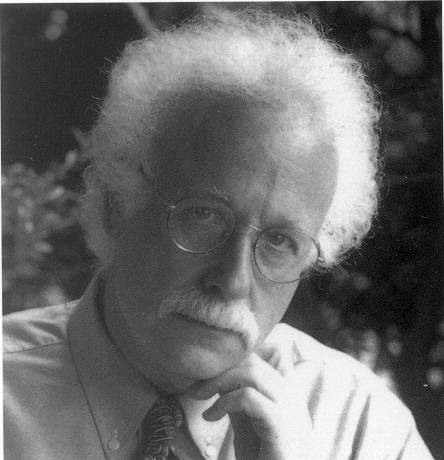
David M. Jacobs, Ph.D. of Temple University.
Casteel:What do the aliens really want?
Jacobs: Well, you know, the ultimate question I think to ask for the UFO phenomenon is "Just what the hell do you think they're here for?" That's the question that I've tried to address in this book--what is this all about? What is happening here? Why is this happening? Why are people saying that these events are happening? So what I've done then is try to answer those questions as best I can by using as much information as I can from eleven years of fairly intensive research into abductions.
And what I've been able to find is that this is a program. They're not here just because they're examining people, or studying people, or experimenting on people. I don't know, Sean, if you remember I gave a talk about that in Los Angeles when I saw you. So they're not here to sort of "examine" us in some way. They're here on a mission. They're here with a goal in mind. They've got a program, and it's a program with a beginning, a middle and an end. It's a program that is goal-directed and I think we're entering into sort of the end-phase of this program. I think that we're moving towards the end of this.
And the program ultimately is not abducting people. Abductions, you have to remember, are a means to an end. They're abducting people for a purpose, for a reason. The physical act of abducting people, which is the abduction phenomenon, really is only part of the program. So what I've done is kind of divided it into component parts and fleshed it out a lot more. So what we have here is an abduction program, a breeding program, which accounts for all the reproductive activity that we see, and a hybridization program, which is why people see hybrids all the time--as babies, as toddlers, as adolescents, and then as adults.
And then, finally, I think all this is leading to an integration program in which ultimately these hybrids, who look very human, will be integrating into this society. And who will eventually, I assume, be in control here because they do have superior technology and superior physiological abilities that we do not have. We would therefore be sort of second-class citizens, I think.
Now, I find this to be very disturbing. And the interesting thing is that I don't really see other scenarios. I know that people feel it's positive and it's wonderful, and all the rest of that. And they're here to help us. But in the cases that I've investigated, very carefully, very thoroughly, for a very long time, I have not had people discuss that. When people discuss the future, generally speaking, they are discussing this integration program that they're confronting, and we're all confronting. I've been involved with UFO research for about 32 years now, since about 1965, and I have never been downcast or depressed about the phenomenon. I have never been pessimistic about it. I've always been filled with wonder and awe and amazement at it. I've been enthusiastic and optimistic about it.
But I must say that now that I've learned as much as I have learned, and I think I've learned an awful lot, I am very, very unsettled and upset by what I see. I don't like what I see. I wish I didn't see this. I wish I hadn't uncovered this. I despair of it. It's thrown me into a tremendous sense of concern about the future and unease. I just don't like it very much. I wish I did. I don't want to be this way. I don't want to be the bearer of bad news. I could not have ever imagined that I would come to this position. What I'm seeing now, what I've found with the phenomenon, I could never have imagined.
Now, though, I am persuaded by the evidence. I think that we are looking at a very serious business happening in front of us. As you know, the UFO and abduction phenomena is very, very widespread. And people have seen tens of thousands, hundreds of thousands, maybe millions of UFOs around the world for a long time now, at least through the 20th Century, and certainly since 1947, and before that as well. It means that the amount of time and energy put into this program is really quite enormous. This means that it has a tremendous amount of importance to these beings.
And there's another aspect to it also that is disconcerting. It's a secret phenomenon. They don't want us to know what they're doing. They don't want us to interfere. This is a consciously-arrived-at and successful secrecy program to prevent us from knowing. Gosh, that makes me very uneasy, Sean.
So anyway, I've become depressed about the whole thing.
Casteel: So the reason for all this negative feeling and depression is because you feel that you and I and people who are natural human beings will somehow be subject to a higher form of oppression?
Jacobs: Of authority, right. I do think that something like that is going to happen. The way I look at is, I have one scenario which I like. All the rest of them I don't like. The one scenario which I do like is that one day, they will come to the abductees and say, "Our program is done now. We have accomplished our goal. We've taken what we need. Thank you so much for your help. Thank you so much for your cooperation. We'll be leaving now. You'll never know we were even there. People will wonder forever whether they were abducted or not. Now, goodbye and good night." That's my favorite scenario. I love that scenario. But in fact, we never hear that. We always hear a scenario about the future in which these beings say they're going to be here with us.
And everything is going to be wonderful. Everything is going to be great. It's going to be just delightful. We're going to like it, they're going to like it, everybody's going to like it. That's the future according to them, but when I take a look at their society, and when I take a look at a future in which they would be in control because of their superior technology and physiological abilities, I see a very, very different society than the kind that we live in now--a society that's far more restricted and far more controlled. The whole concept of individual freedom in this kind of society would be under serious question. I don't like that. I don't want it. I would rather have human beings make their own mistakes and fix their own problems and do things by themselves. I think we're perfectly capable of doing it. I think we can all live together into a happy future. I think that's within the realm of possibility.
Casteel: So they paint a Utopian picture of what's going to happen?
Jacobs: Well, they paint a picture of what they consider to be good for themselves. And they live in a controlled society. They live in a society where everybody knows his or her job. They live in a society where everything is controlled. The ability for people to act independently is very, very circumscribed in this kind of society that they live in. I just don't like it. I'm filled with apprehension over this. Now the key thing here is they are here for a reason. They are not studying or experimenting on us, and they're keeping their activities secret from us so we won't find out.
Casteel: That's what you were saying at the lecture, that they were way beyond the experimental stage.
Jacobs: Right. In fact, that was the title of the lecture "Is this an experiment or a program?" You don't have to be a rocket scientist to see what's going on. This doesn't look like an experiment to me, you know. It's been worldwide with millions of people for 50 years. Day in, day out, 24 hours a day. What kind of an experiment is that? And there are a lot of other reasons why it's not an experiment.
So it's disconcerting. And I never used to think this until I began to put it together--until I began to come to these conclusions and realize I think this is what it is. I think that in the book, basically, I've advanced hypotheses which might very well essentially be what this UFO phenomenon is all about. This is not the final aspect of studying this phenomenon, but I do think that I've fleshed out what the goals and purposes are. We're not exactly sure of all the "whys." Why they would want to do it in the first place? What's the point? We don't really know that. But I think this is certainly a hypothetical answer to the UFO puzzle. I think pretty much we've answered it.
That's what we're looking at. And therefore I think we're looking at a very difficult future.
Casteel: So the "how-they-plan-to-get-it" part would be through the breeding and hybridization programs?
Jacobs: Yeah, but how it's going to be played out, I don't really know. There's a lot of different scenarios. There's the Disaster Scenario that abductees keep talking about over and over again. We've had this for years and years. I don't quite know how that's going to happen. Whether there's going to be a disaster or not. There's a scenario where they just sort of naturally and nicely integrate into this society and we never even know it's happening. I guess there's things in the middle. We don't really know how what the aliens and abductees call "The Change," is going to take place. We don't really know that quite yet.
Casteel: But they're given visions like the world on fire or natural disasters, that kind of thing?
Jacobs: Yeah, well, it's all sorts of disaster scenarios, which includes atomic war. It includes asteroids hitting the earth. It includes floods, plagues, famine, whatever. It's sort of a generalized disaster and you just fill in the blanks as to what kind of disaster it will be. It's really non-specific, although people report more atomic war or the earth cracking in half or being destroyed by a comet or something like that more than other things, I guess.
I don't think the specifics are all that important, but the idea of a disaster is the most important thing. But I don't know whether that's true or not. We really don't know that yet because it might be a very different scenario. But I'm certainly going to stick by my guns and say that this is an integration program. However it's worked out, they will be integrating into this society and that's what this is leading to.
As I say about all my books, there's no possibility, Sean, that I have avoided error. I'm going to be wrong somewhere, somehow, in God knows how many things. But I think that this hypothesis that I'm presenting here is supportable by the evidence. And that's what makes it more disturbing. Everything I've written in this book is evidence-driven. That's why it's such a difficult book to deal with.
Casteel: Well, it's like "Invasion of the Body Snatchers," where you end up mouthing the words, "It's better this way. We have no pain now."
Jacobs: You are exactly right. I've thought about that, too. And of course one of the things I've been criticized for is because it has such a science-fiction quality to it. And then people say, "Therefore it is science-fiction." People have picked it up in the culture and that's why I'm hearing this. What they do is they make the mistake by finding similarities and saying that the similarities are in fact equalities. Which, of course, they are not. The fact is though is that it does have what they call "Programmatic Content." It does have content whereby we can see the inner workings of what they're doing and what's happening. And there are parallels in science-fiction, and certainly one of them is "Invasion of the Body Snatchers." That is in fact one of the parallels we see. But there's a lot of other parallels in science-fiction also. And if you look hard enough, you're going to be able to find a bit and a piece of it here and there and everywhere. But I don't think that this is science-fiction.
You've got to remember that most abductees are really not much into science-fiction. Most people I work with say they don't follow science-fiction. They haven't seen those movies. They don't know about that kind of stuff. It's not something where it just pervades the society. As people try to tell me, "Well, it's just sort of everywhere." Well, it isn't exactly like that. You've got to remember that the abduction phenomenon, while similar to science-fiction here and there, is really very different in almost all of its areas. It really is a different kind of situation, as you know.
And of course you have situations where people see other people being abducted and people are physically missing from their normal environment. There's a strong physical component to it that's very tough to explain.
Casteel: One thing I thought was interesting was the way you went over the varying degrees of hybrids. Varying percentages of human versus alien combinations.
Jacobs: Yeah, I tried to put forward a new concept of hybridization. One that makes more sense and one that's more in line with the evidence as it's presented by the abductees.
Casteel: Like subtle degrees between the various kinds?
Jacobs: Right. And you know, it does make sense that way. It answers a lot of things. It makes sense primarily because abductees have been saying this. So I was able to divide it into sort of like late stage, middle stage, and early stage hybrids. But one of the interesting things about this phenomenon, Sean, is that you know I talked about toddlers and what kind of toys they played with and young children and what they play with. And I even had some sort of "widget" that the adolescents tinkered with. Remember? There was that one sequence where he had a box and he had to press certain things and if he pressed them the right way there was a flash. Remember that?
Casteel: Yeah, like an alien Nintendo or something?
Jacobs: Right. But in terms of toys, we basically know quite a lot about alien toys, about kids' toys, and all that. And the hybrids and what they do. I spent a lot of time on hybrid children. If this were psychological, I couldn't do that. We wouldn't be able to describe certain toys that they used that other people have described as well. We're learning so much about this phenomenon, it's just extraordinary. And yet everything we learn points in the direction of the integration program.
Remember I talked about this one woman who was involved in this sort of learning situation in which she was standing in front of a class of hybrids. And a picture of a dog came down.
Casteel: Right, and she was supposed to explain all the earthly things.
Jacobs: And she was asked "What's a dog for?" And she said, "Well, you know, it's a companion" and all that. But see, that points to integration into the society. Everything points to it. This concern, this interest in earth things. I don't think it's just sort of "interest." I think they're interested in it for a reason. The interesting thing here is they're not saying, "How do you elect a president?" "What do you do Saturday night?" and things like that. They're not interested in politics, economics, culture, society. That they're not concerned with. And we almost never, never get questions about that. But if this were psychological, we would be getting questions like that. But they're interested in physiology, they're interested in anatomy, they're interested in the natural world, the environment, animals, things like that. Things that are not man-made necessarily. As if in the future, it's not going to matter what we have built. The only thing that's going to matter is what they do. That's one way of looking at it.
But it's disconcerting. You want them to ask questions about Clinton, you know, and things like that. Something where you can see they really are learning about society, but in fact, if they integrate into this society, there's going to be an overlay of their society. And ours isn't going to matter a whole lot. That's my interpretation. Now I might be awfully wrong about that, but it certainly is my interpretation of it.
Casteel: Well, given the inevitability of it all, you just kind of want to hang on to some kind of shred of hope that it'll be a good thing somehow.
Jacobs: Well, the one hope I have right now is not much of a hope. But the hope that I have right now is the fact that it's still secret. That is to say that as long as it's still secret, they must assume that they are still vulnerable and therefore there's a way that we can affect the program. That's not a whole lot to hang on to, for me. But you know I despair that the scientific community is going to realize the import of what's happening in front of them. I think that even if they do, there's so much water under the bridge and we're so far down the line with this that indeed it may make no difference. Maybe 30 or 40 years ago it might have made a difference, but I'm looking to the future where I just don't see the scientific community getting interested in this subject. It hasn't happened in the past, and failing some sort of sudden event, some sort of sudden revelation, some sort of incredible thing, "Clinton Exposed As Alien Himself," or something like that, I just don't see them becoming interested in it. They've had half a century of the ability to have that interest and have not utilized it.
I don't like what I'm seeing here. I've spent my entire adult life studying this subject intensely. Year after year. I have a professional degree with a Ph.D. in the subject and I teach the only course in the country on the subject, the only regularly scheduled, full credit course in the country, which I've taught for 19 years. I've written three books on the subject and many articles. And I've never really felt the despair I feel now that I think that we've broken it open and we're looking at it and examining it. And it's just not what I expected. It's not what anybody expected. I just wish it was not that way. I just don't like it.
However, this is one of those situations where you can despair of it--you can feel Oh, my God, this is awful--but you have to lead your life as though it's not happening. It's the only way you can get along. It's the way I get along. And I've got two kids, you know. So I look at them and I look at the book and I don't know what kind of future they're going to have. That's true. I really don't. That wasn't just words. This is of great concern to me. I really don't know what kind of future they're going to have.
Casteel: Well, again, I guess the one ray of hope is the possibility that it won't be a cruel form of oppression to live under them.
Jacobs: Well, that certainly might be possible. I don't think it's going to be a cruel form of oppression. I just think it's going to be very different and not to our liking. I don't see an oppressive situation necessarily. I don't think that we're going to be whipped like a slave in a galley on a Viking ship or something like that. But at the same time, I do not see the freedom of movement and action and activity that we have now. Individual freedom and freedom of thought and all that to be the same in the future as it is now.
You've got to remember these beings are telepathic beings. They tap right into your thoughts. I don't want anybody tapping into my thoughts. When I was down in Brazil earlier I gave a paper on what it's like to live in a telepathic society based on abductees' testimony about the society that the aliens live in and the kind of telepathy that the abductees experience. And Sean, you don't want that society. You want to be private. You want to keep your thoughts private. You want to have individual expression, individual thoughts. You want to be able to do what you want to do without anybody knowing. And in their society, that's not necessarily true. It's a different kind of society.
So, is alien integration into Earth's society already a given? Will we lose many of the freedoms we currently enjoy to the superior capabilities of the aliens and the hybrid offspring that are also a part of us?
The old truism "Only Time Will Tell" seems operative here, as it does with so much of the UFO mystery. And in the words of rock singer Tom Petty, "The Waiting Is The Hardest Part."
Photo copyright David Jacobs 1998
